


The 2026 Intelligent Robotics Symposium, jointly organized by the School of Automation of Southeast University, the Nanjing Branch of IEEE Industrial Electronics Society and the Servo and Motion Control Committee of Jiangsu Automation Society, was held in Chunhui Hall, Lidong Building, Sipailou Campus of Southeast University on March 20, 2026. The symposium aims to focus on the cutting-edge breakthroughs and technologicalapplications in the field of intelligent robots, gather top scholars from home and abroad, build a bridge for high-level academic exchange and cooperation, andjointly explore new pathways for technological innovation and industrial integration in intelligent robotics.
10 outstanding young experts and scholars from Singapore, Italy and many well-known universities and research institutions in Chinawereinvited to give special reports.Professor I-Ming Chen from Nanyang Technological University, Professor Giuseppe Carbone from East China Jiaotong University, Professor Ding Zhengtao from the University of Manchester, Professor Cheng Long from the University of Chinese Academy of Sciences, Professor Wang Jingcheng from Shanghai Jiao Tong University, Associate Professor Lin Tianlin from the Chinese University of Hong Kong, Shenzhen, Researcher Chen Silu from Ningbo Institute of Materials Technology and Engineering, Chinese Academy of Sciences, Professor Liu Wei from South China University of Technology, Professor Fan Qigao from Jiangnan University, and Assistant Professor Lyu Shangke from Nanjing University took the stage in turn.They shared insights into frontier topics including robotics and AI systems, grasping design, energy optimization, soft robotics, industrial intelligence, modular clustering, human-machine integration, unmanned aerial vehicle control, micro-robotics and legged robotics reinforcement learning. Professor Li Jun, Professor Pan Yongping, Professor Li Shihua, Professor Huang Lingying, Professor Wang Xiangyu, Professor Ding Runze, Associate Professor Gan Yahui, Associate Researcher Wang Yongjian, Associate Researcher He Pengfei, and Professor Cao Hu from the School of Automation, Southeast University, served as the hosts of each session respectively. More than 50 students and faculty members from both within and outside the university gathered together, creating a strong academic atmosphere and a lively exchange.
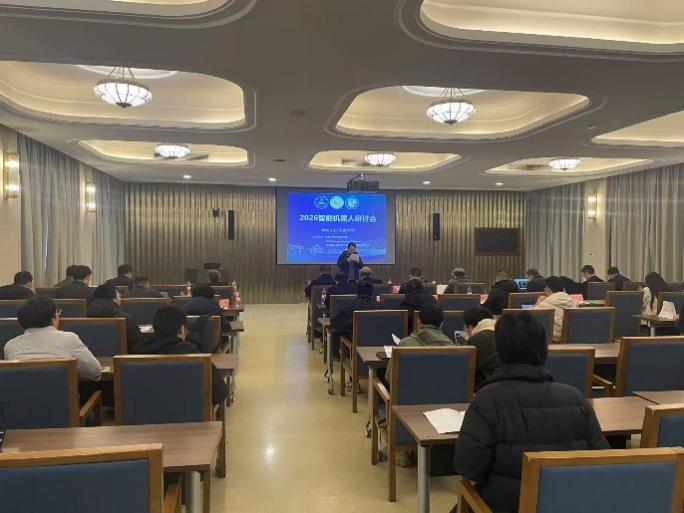
The venue of the 2026 Intelligent Robotics Symposium
The opening ceremony was chaired by Associate Professor Zhou Bo, Vice Dean of the School of Automation at Southeast University and deputy director of the Servo and Motion Control Committee of the Jiangsu Automation Society. In his opening remarks, Professor Li Shihua, the dean of the School of Automation at Southeast University, IEEE Fellow, Chair of the Nanjing Branch of IEEE Industrial Electronics Society, and president of Jiangsu Automation Society, extended a warm welcome and sincere thanks to the experts and scholars who had come from afar, and also extended a warm welcome to the teachers and students present. He said the symposium provided a high-quality exchange platform for colleagues at home and abroad and looked forward to deepening cooperation and jointly promoting innovation and development in the field of intelligent robotsthroughthis meeting.
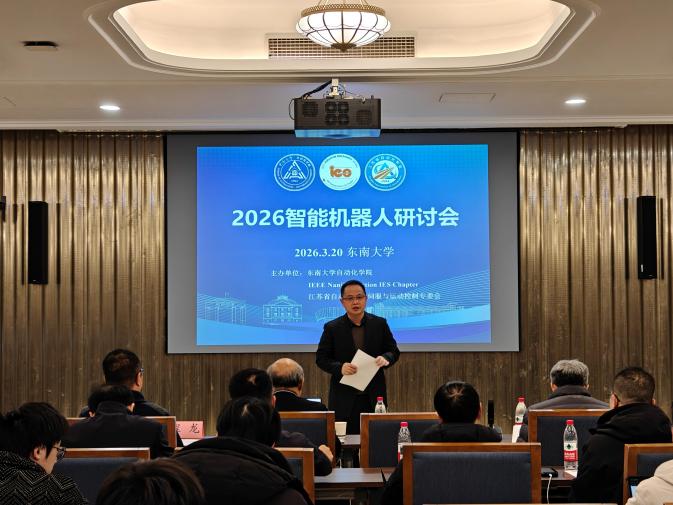
Professor Li Shihua delivered a speech
Professor I-Ming Chen, an academician of the Singapore Academy of Engineering and from Nanyang Technological University, gave the opening speech titled "A System Perspective on Solving Real World Challenges Through Robotics & AI" A presentation by Professor Chen. Professor Chen has extensive experience in robotics and automation and holds significant academic positions. His report, set against the backdrop of global industrial labor shortages and an aging population,presenteda hierarchical system framework for the integration of robots and AI, emphasizing the combination of software and hardware and the guarantee of system robustness by domain data,introducedthe multi-domain practical application of the framework, and looks forward to the research direction of embedded AI for robot joint actuators. The aim is to build reliable, economical and sustainable industrial intelligent systems.
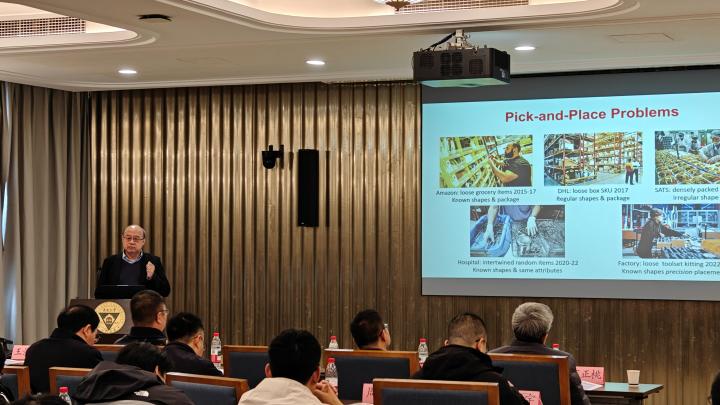
Professor I-Ming Chen presents
Professor Giuseppe Carbone from East China Jiaotong University presented at the second session of the symposium titled "Design Concepts and Examples of Robotic Grasping". The report focused on the intelligent design of robot grippers and manipulators, noting that the efficiency of the gripper system stems from the synergy of mechanics, sensing and control, rather than complex and expensive hardware. The team achieved robustness, adaptability and cost-effectiveness advantages of the grasping system by simplifying the structure and modularizing the design, and also introduced streamlined drivers, iterative prototyping and virtual testing techniques to provide practical paths for the development of intelligent grasping solutions.
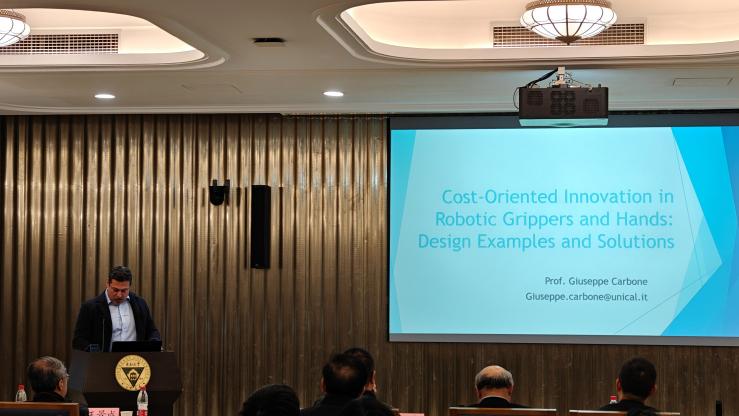
Professor Giuseppe Carbone gave a presentation
Professor Zhengtao Ding from the University of Manchesterpresentedat Session 3 of the symposium titled "Distributed Optimization, Learning and AI for Power and Energy Systems".Against the backdrop of net-zero emissions goals, the report focused on the challenges of power and energy systems, presented the team's research progress in areas such as distributed learning and optimization, explored key roles such as multi-agent system collaboration, expounded on the empowerment of energy systems by AI (including natural language processing) to support net-zero goals, and shared industrial practical experience.
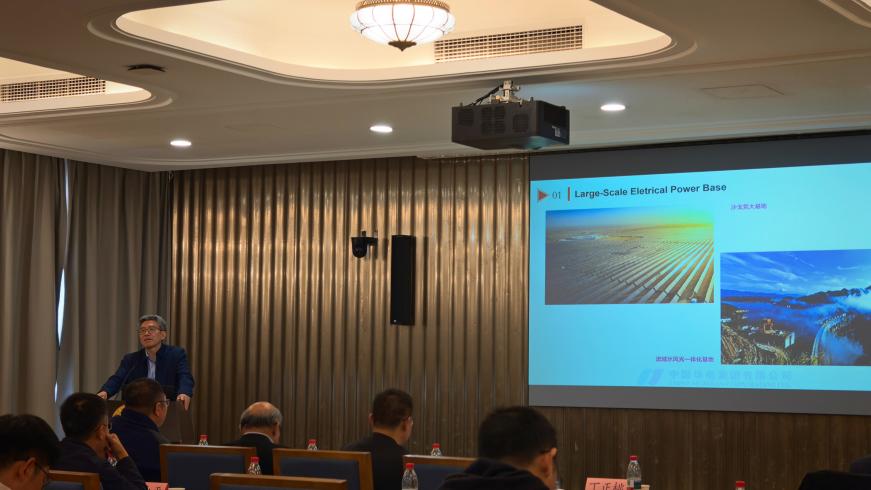
Professor Ding Zhengtao delivers the report
Professor Cheng Long from the University of Chinese Academy of Sciences gave a presentation titled "Design and Application of Soft Robots Imitating Lobster Tails" in the fourth session of the symposium. In response to individualized rehabilitation needs for hand spasms, the report presents the self-developed imitation lobster tail soft actuator and the hand rapid traction robot developed based on it, providing a new solution for spasm relief; At the same time,the team also explored the activity patterns of the sensorimotor cortex under different traction parameters and develop a clinical trial protocol to verify the effectiveness of the method.
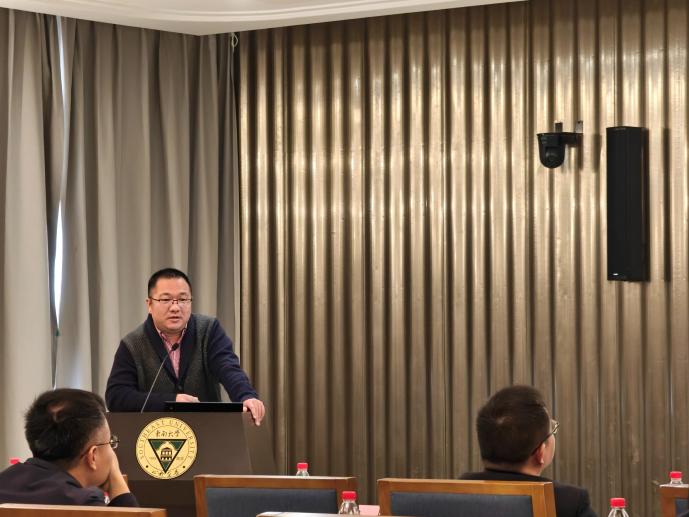
Professor Cheng Long gives a presentation
In the fifth session of the symposium, Professor Wang Jingcheng from Shanghai Jiao Tong University gave a presentation titled "Discussion on Data-Driven Industrial Intelligence Applications". Based on the idea of data-driven modeling and system optimization, the report focused on multiple actual industrial demands and problems, and explored and demonstrated its industrial data intelligence application solutions in multiple scenarios around mechanism, data, and knowledge-driven extraction and utilization of available information, providing practical technical paths for the transformation and upgrading of the industrial field.
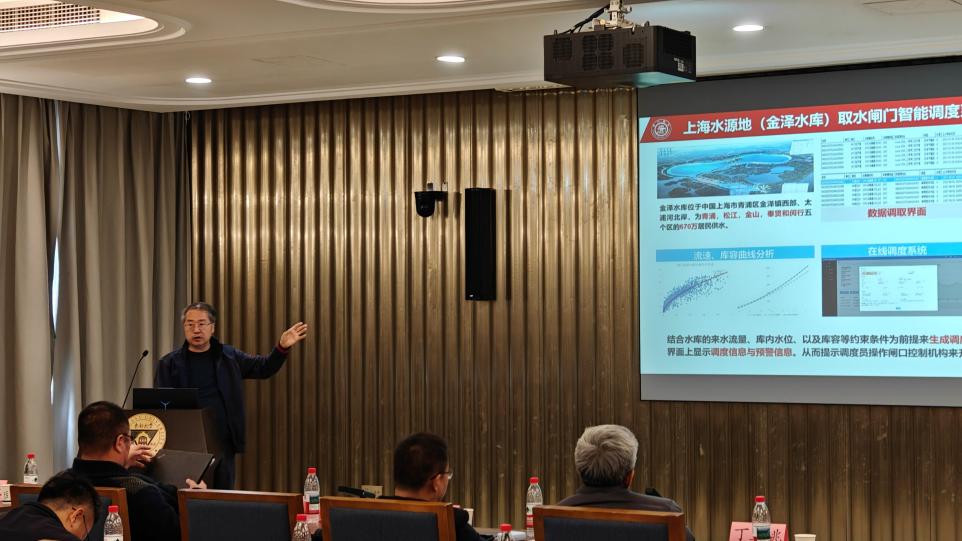
Professor Wang Jingcheng gives the report
Associate Professor Lin Tianlin from The Chinese University of Hong Kong, Shenzhen delivered a presentation titled "Collaborative Surveying and Construction of Unknown Spaces in Modular Self-Reconfigurable Robot Clusters" at the sixth session of the symposium. Based on the background of the construction of an extraterrestrial lava tube deep space base, the report pointed out the limitations of traditional fixed-configuration robots that are difficult to adapt to extremely complex environments, introduced the core characteristics of this robot cluster, such as topological dynamic recombination, functional module integration and swarm intelligence collaboration, to provide an innovative solution for the exploration and construction of unknown space, and explored its interdisciplinary development status, key problems and future directions.
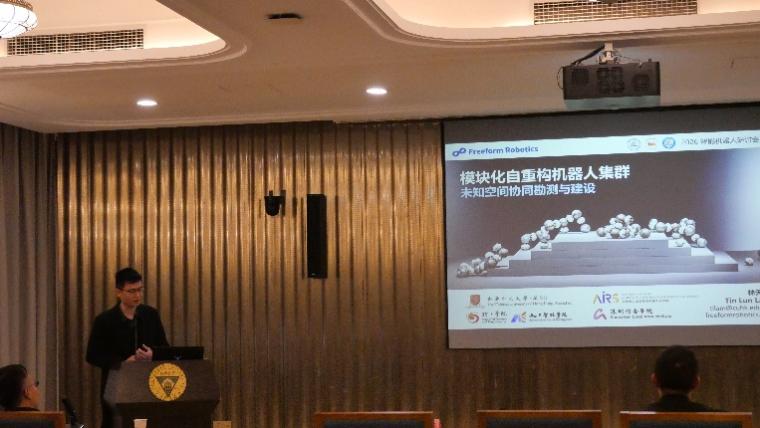
Associate Professor Lin Tianlin gives the report
In the seventh session of the symposium, Dr. Chen Silu from Ningbo Institute of Materials Technology and Engineering, Chinese Academy of Sciences, presented a presentation titled "Efficient Modeling and Real-time Control Methods for Robots Oriented to Human-Machine Integration". The presentation addressed the challenges of motion accuracy and human-machine interaction safety for collaborative robots by introducing torque sensorless impedance control for flexible joints, efficient kinematic calibration calculation models based on unit dual quaternions, and efficient derivation methods for linear parametric dynamics models, achievinga 20% reduction in error compensation calculation time and laying the foundation for subsequent compliant motion control. It ensures the safe and stable operation of the robot in harsh interaction environments.
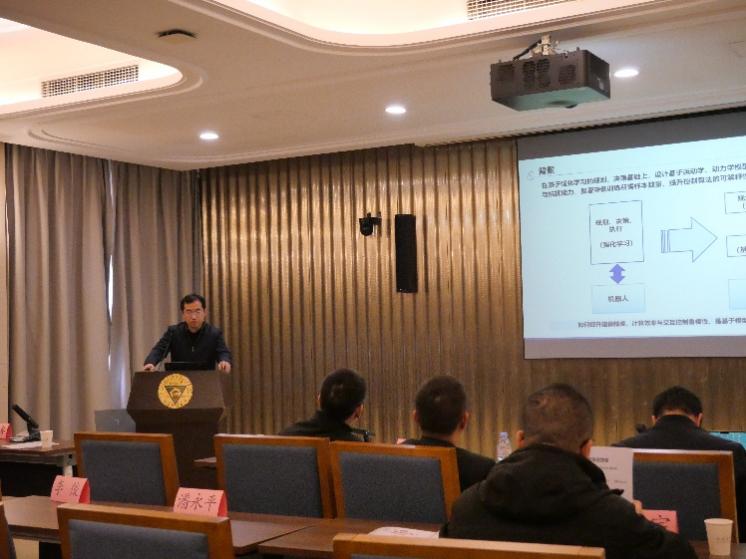
Researcher Chen Silu reports
In the eighth session of the symposium, Professor Liu Wei from South China University of Technology gave a presentation titled "Modeling and Control of New Unmanned Aerial Vehicle Systems". Based on the strategic emerging industry of low-altitude economy, the presentation focused on the structural design, dynamic modeling and pose control schemes of amphibious unmanned aerial vehicles (UAVs) and tilting rotorcraft UAVs, and looked forward to the future research directions and application scenarios in this field, providing new ideas for technological innovation and engineering implementation of UAV systems.
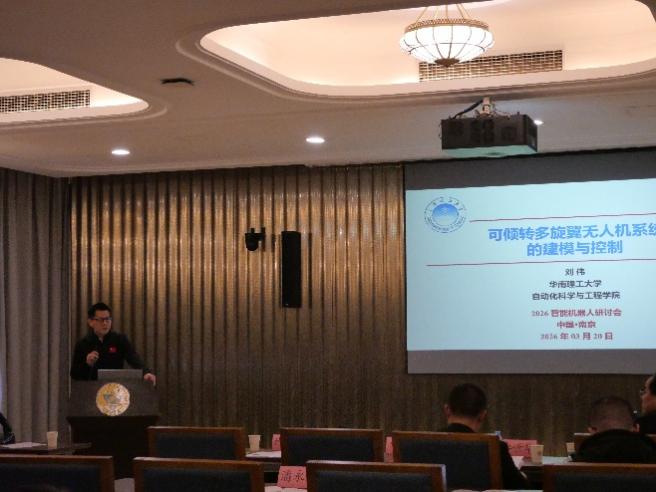
Professor Liu Wei gave the report
In the ninth session of the symposium, Professor Fan Qigao from Jiangnan University gave a presentation titled "Reliable Drive and Active Safety Control of Magnetic Micro-Robots". The report addresses the issue of insufficient understanding of the motion complexity of magnetically driven microrobots, returns to the research foundation of the field, integrates multidisciplinary theories and knowledge, and explores key scientific issues and solutions for magnetically driven microrobots in scenarios such as precision medicine and biological manipulation, aiming to optimize system control performance and reliability. To address the fundamental question of how to design and control the underlying systems of magnetic drive microrobots, and to enhance the stability and safety of the robot systems.
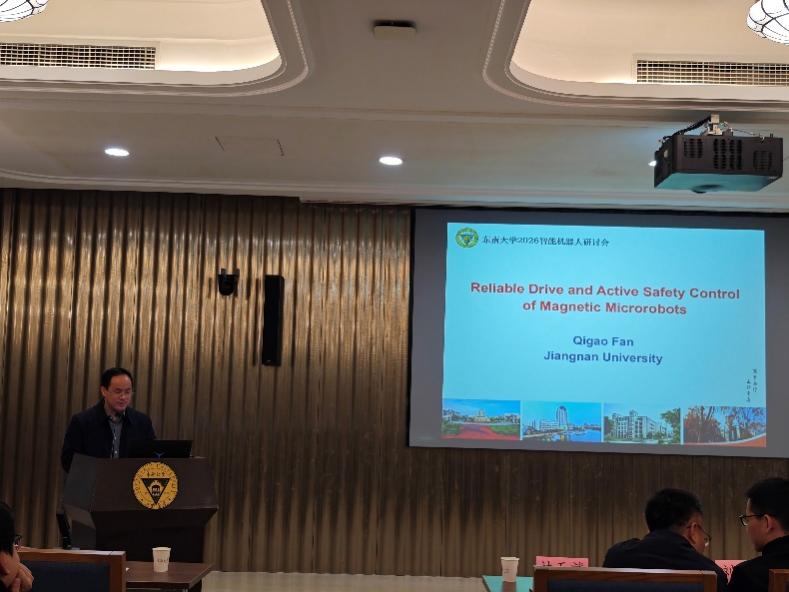
Professor Fan Qigao gives a presentation
Assistant Professor Shangke Lyu from Nanjing University gave a presentation titled "Reinforcement Learning Strategies for Legged Robots Driven by Mechanism and Data Hybrid" in the final session of the symposium. The presentation addresses the limitations of pure data-driven reinforcement learning algorithms for legged robots in terms of motion mechanism, sample efficiency, and generalization ability, and combines the interpretability and stability advantages of mechanism modeling to introduce methods for enhancing the robustness of reinforcement learning strategies using mechanism models. It covers ensuring motion stability under external disturbances, optimizing training efficiency, and integrating adaptive control to enhance adaptability to unknown environments, providing new solutions for reliable motion control of legged robots.
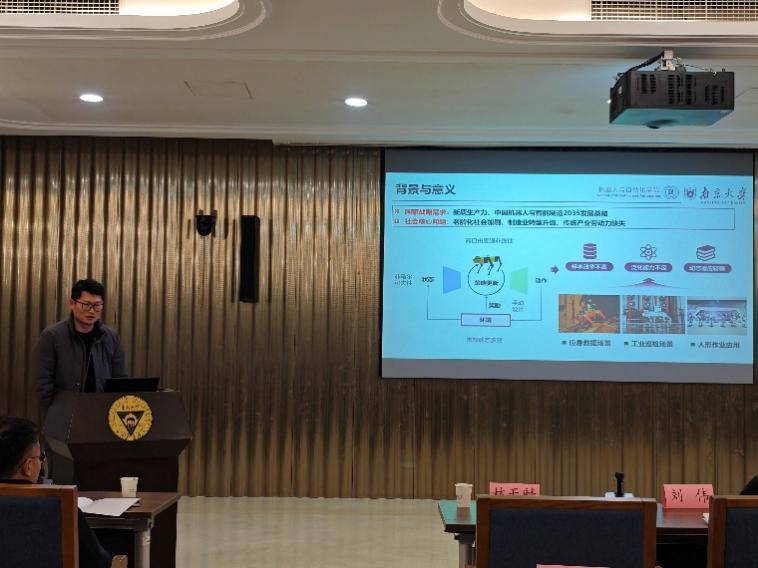
Assistant Professor Lv Shangke reports
The ten presentations at the symposium were cutting-edge and of both theoretical depth and practical value, sparking intense exchanges and discussions among the participants, teachers, students and experts. After the presentations, Professor Li Shihua, the dean of the School of Automation at Southeast University, delivered the closing remarks, expressing gratitude for the support and efforts of all parties and affirming that the symposium closely followed the pulse of development in the field of intelligent robots and established a high-quality academic exchange platform.
The symposium concluded successfully, effectively promoting the exchange of ideas and sharing of knowledge, and injecting new vitality into technological progress and industrial development in this field. Participants all said that their research horizons were broadened and their innovation directions were clarified.
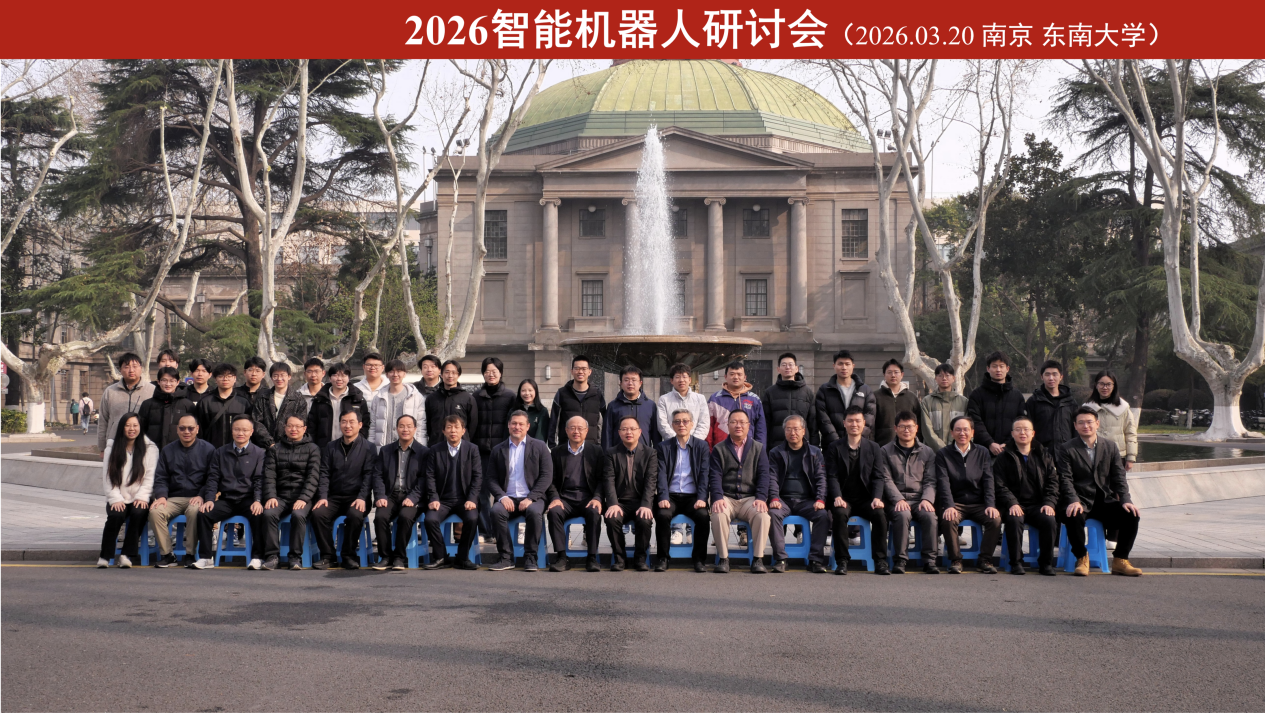
Group photo of the seminar
Photograph: Jiang Jiabin
By Chao Wangrui
Reviewers: Ji Xin, Huang Lingying, Wang Xiangyu


