


Recently,the team led by Professor Danfeng Hong from the School of Automationat Southeast University made significant progress in the field ofHyperspectral Imaging (HSI), and the related results were publishedin the top international methodological journal Nature ReviewsMethods Primers. The paper systematically reviews the complete chainof hyperspectral imaging from concept definition, imaging mechanismand technical path to data processing methods and typical applicationscenarios, and deeply analyzes the key challenges and cutting-edgedevelopment directions of hyperspectral technology in the era ofartificial intelligence. This achievement provides an authoritativemethodological guide for multidisciplinary researchers and isexpected to further promote the extensive expansion and far-reachingimpact of hyperspectral technology in scientific research and socialapplications.
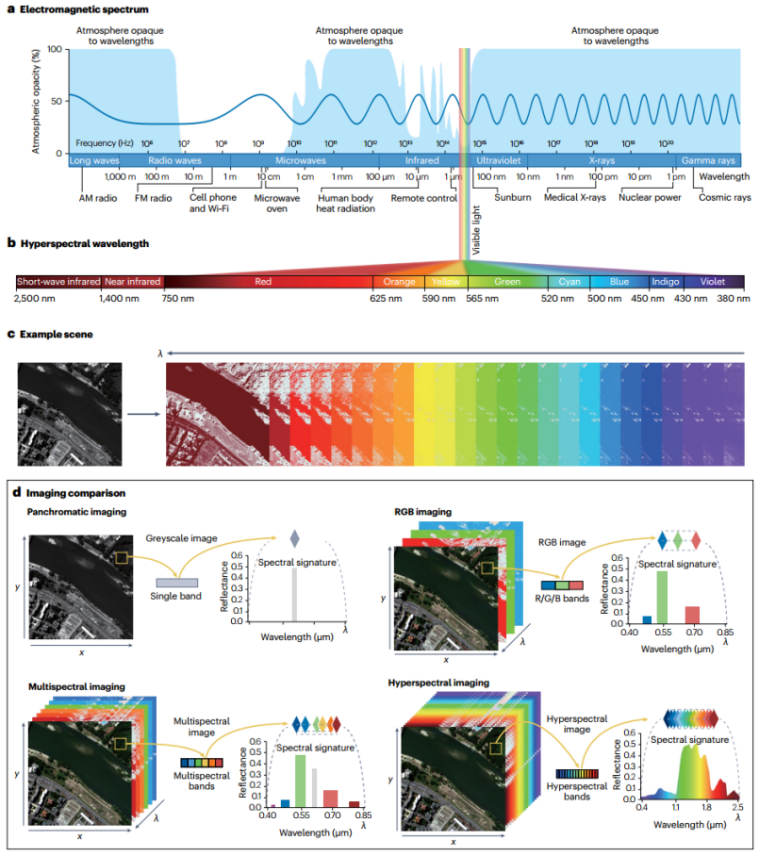
Figure1 Schematic diagram of hyperspectral imaging data and comparison ofdifferent imaging modes
Inthe broadest sense, hyperspectral imaging (HSI) refers to theacquisition of spatial-spectral joint observation data across a wideelectromagnetic spectrum range from the electromagnetic spectrum(Figure 1a), with coverage extending from the terahertz and microwavebands to the mid-wave and long-wave infrared regions. This paperfocuses on the most widely used range of atmospheric Windows in thefield of image processing and analysis, typically covering the380-2500 nm band (Figure 1b). HSI acquires hundreds of continuousspectral channels with high spectral resolution (typically 5-10 nm),which gives it the dual advantages of wide spectral band and finespectral sampling, enabling effective identification and finedistinction of various constituent materials in the scene (FIG. 1c,d).
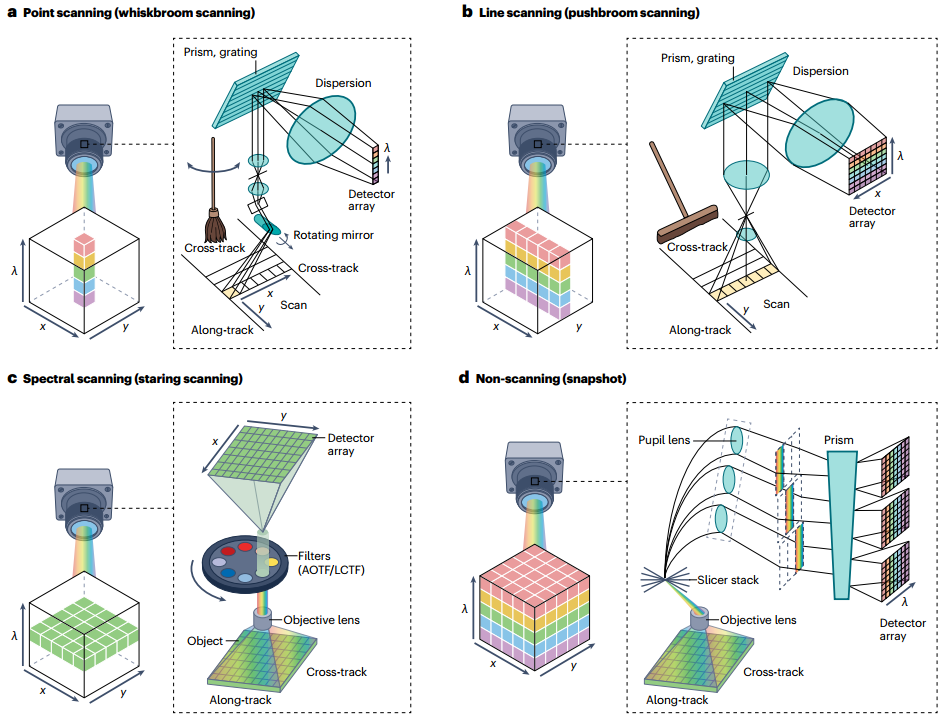
Figure2 Different scanning modalities of hyperspectral imaging
Hyperspectraldigital images are typically obtained by spectral scanning of thetarget scene with an imaging spectrometer, mainly including fourtypical imaging methods: swing scan (Figure 2a), push scan (Figure2b), gaze scan (Figure 2c), and snapshot imaging (Figure 2d).
Thegeneral workflow of hyperspectral data analysis typically involvesstarting from the hyperspectral data of emissivity or reflectanceobtained from observations, and then proceeding with low-levelprocessing (such as image restoration, image enhancement anddimensionality reduction) and high-level analysis tasks (such asclassification, spectral unmixing and target detection).
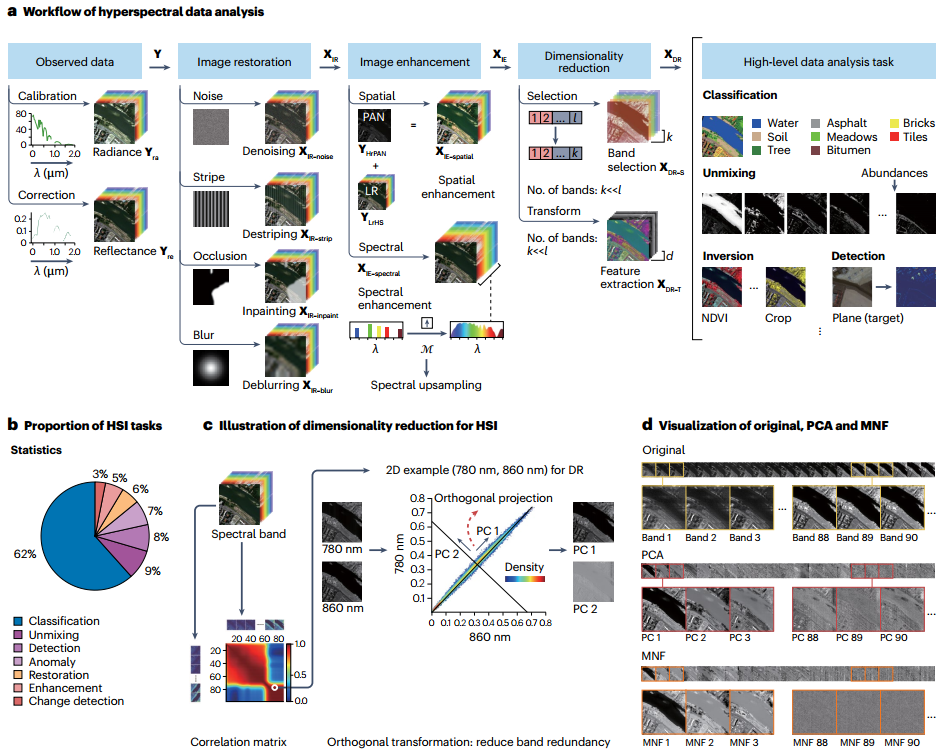
Figure3 Hyperspectral image analysis process
Basedon the current limitations of hyperspectral imaging and emergingoptimization strategies, Professor Hong Danfeng's team Outlines along-term vision for future development in the field:
(1)"3J" intelligent collaboration: The3J concept emphasizes deep coupling and collaborative optimization ofJoint sensing, Joint computing, and Joint quantification, coveringsoftware and hardware collaborative design and multi-typehyperspectral sensor collaborative observation. And a joint modelingframework for multimodal data with HSI at its core.
(2)Full-view structured imaging: Integratelight field imaging, structured light illumination and hyperspectralsensing technology with AI-driven modeling and analysis methods tobuild an integrated perception framework and promote the developmentof a new generation of 4D and even higher-dimensional hyperspectralimaging platforms.
(3)HSISmart Brain: Hyperspectralagents for active cognition break through the traditional passivereasoning model by integrating physical perception priors,self-supervised spectral learning, and causal reasoning mechanisms toreveal the underlying material composition, implicit states, andunderlying physical processes that are difficult to directly observewith traditional imaging, achieve deep analysis of complex scenarios,and form a closed-loop intelligent system of"penetration-reasoning-action-feedback" It enables imagingsystems to have autonomous scene understanding and decision-makingcapabilities.
(4)Vision of "Nine-Nine Unification" : Atthe data level, achieve a highly compressed unified representationthat can be reconstructed into observation products of differentsensor types, data scales, and spatial spectral resolutions; At themodel level, build a unified architecture to accommodate multipletypes of HSI input and processing tasks; At the application level,form a universal system platform that can flexibly support diversehyperspectral application scenarios, ultimately serving scientificdiscovery, technological innovation, and real-world decision-making.
PaperLink:
https://www.nature.com/articles/s43586-026-00470-x
Thisstudy was supported by the National Natural Science Foundation ofChina (42271350) and the International Cooperation Program of theChinese Academy of Sciences (313GJHZ2023066FN).


